RAIN JACKETS OEM ODM PRIVATE LABEL

Rain Jacket Manufacturer
for Everyday Weather and Travel

Develop a rain jacket that people want to carry and find practical when the weather changes. Start with the wearing occasion, then bring coverage, comfort, storage and construction into one clear product brief.

SNOSEAM works with brands and organizations on custom jacket development and manufacturing. Bring your tech pack, reference garment or initial direction. We can review the material choices, fit, branding and sample work needed to turn that direction into an agreed production reference.

For lifestyle collections travel ranges and organizational apparel programs

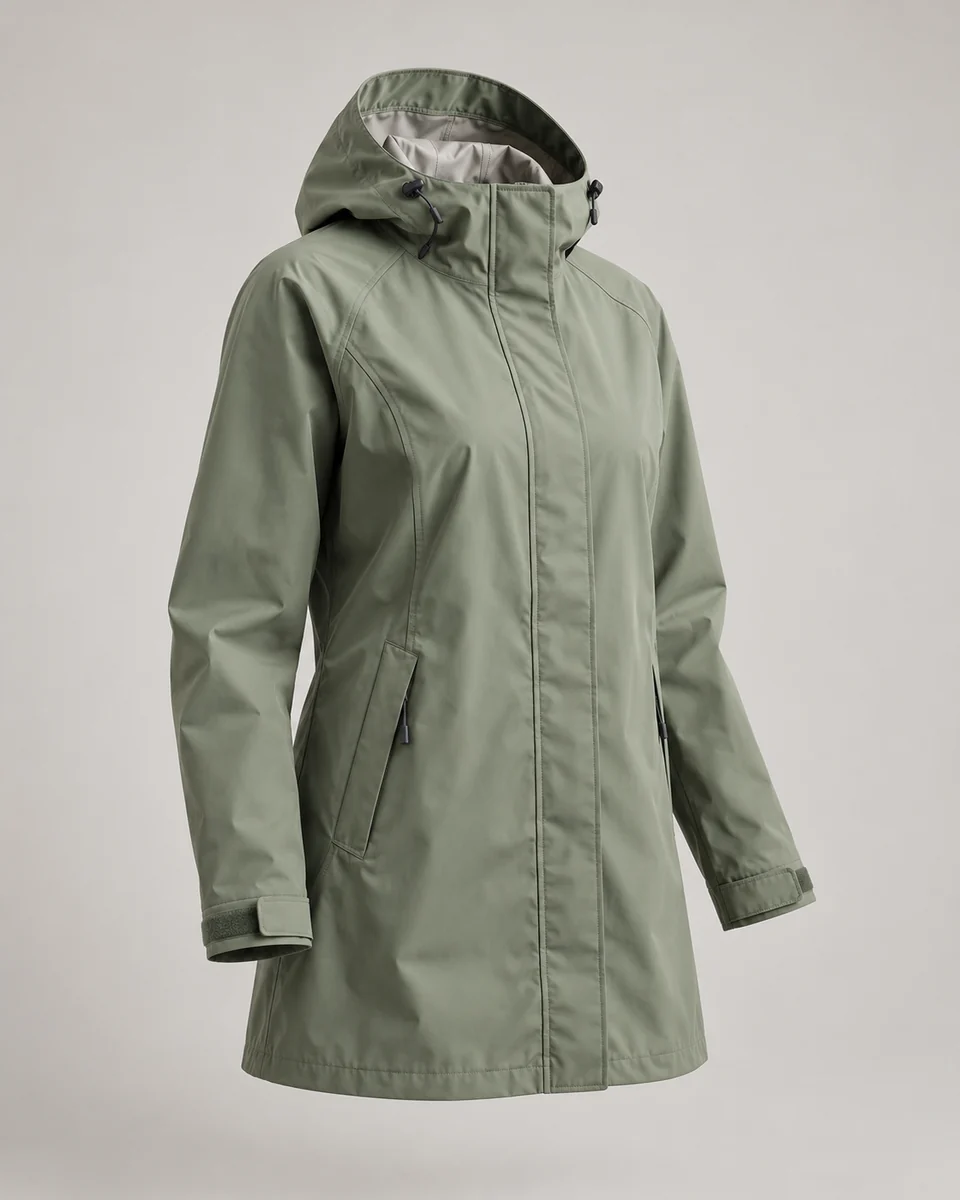
Sage green hooded raincoat with front storm flap and extended body coverage

DEFINE THE WEARING OCCASION

Choose the rain jacket your customer needs to carry

A daily commuting coat and a compact travel layer can both be rain jackets, yet the reasons people choose them differ. One may prioritize coverage over everyday clothing. Another may need to spend most of its time in a bag. Define those priorities before adding features that increase weight, bulk or complexity.

The directions below frame a development conversation. They are not fixed stock specifications. Material references, measurements and any performance claims are confirmed for the selected project and sample.

01

Daily commuting

Start with body coverage, easy layering and a clean appearance. Review the hood with the collar fastened, pocket access while carrying a bag and comfort when sitting. A longer silhouette needs a movement review so added coverage does not make the jacket awkward to use.

02

Travel and carry

Begin with where the garment will be stored and how often it will be unpacked. Discuss a separate pouch, an integrated storage pocket or a simple fold. Compare the finished sample for handling, bulk and appearance after storage rather than choosing from a fabric weight alone.

03

Team and organizational use

Clarify who receives the jacket, the clothing worn underneath and how sizes will be ordered. Keep branding, care information and repeat order requirements visible in the brief. Any occupational protection or regulated use needs a separate requirements assessment.

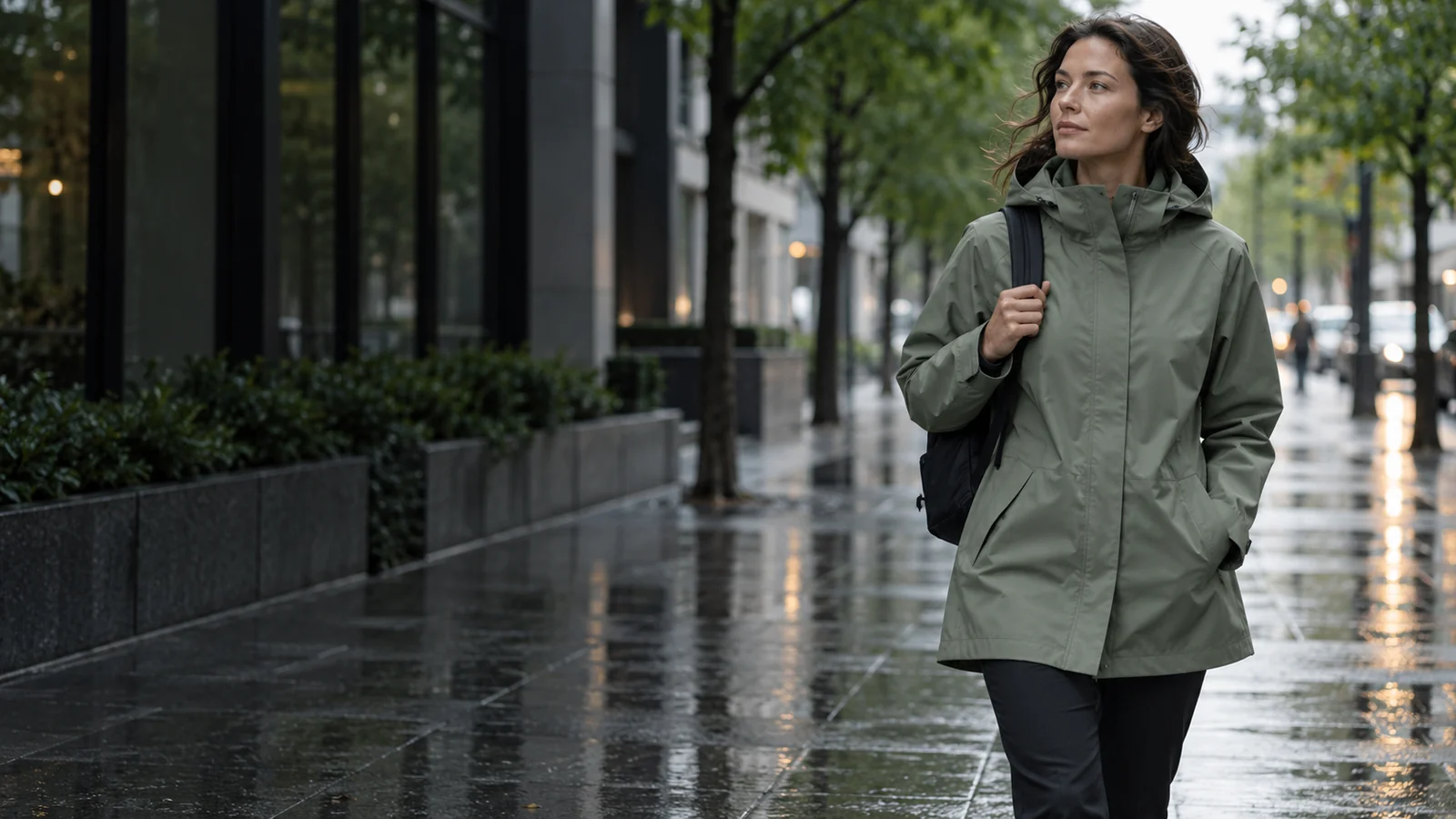
Commuter wearing a sage green rain jacket on a wet city street

DESIGNED AROUND REAL ROUTINES

From the morning commute
to a change in the forecast

Describe the complete wearing routine. How does the jacket fit over work clothing? Can the wearer reach a pocket with a shoulder bag in place? Where does the hem sit when walking or sitting? Is the hood comfortable when turning the head?

These everyday details give the sample review a useful purpose. They also help your team decide which features deserve priority when appearance, carry volume, comfort and the required protection must be balanced.

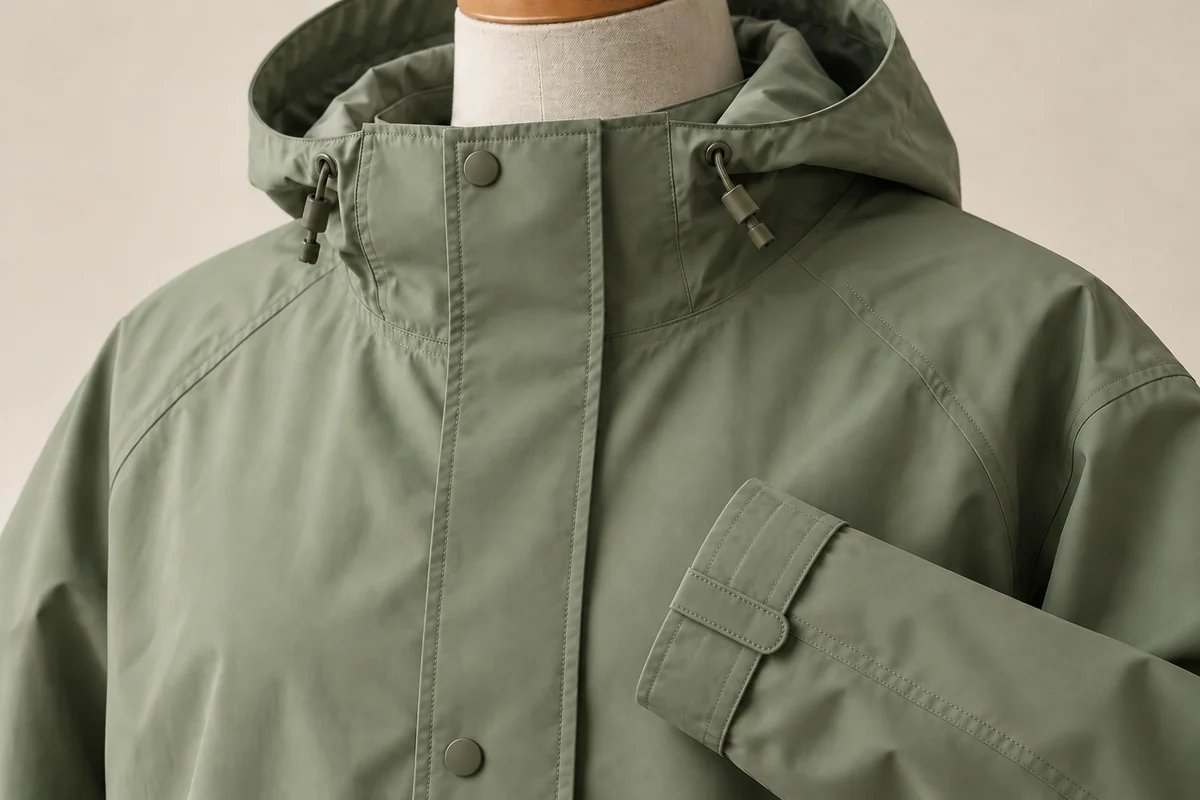
Sage green raincoat with aligned storm flap snaps and a closed cuff adjustment strap

Check the jacket while it is worn

Include walking sitting reaching and head movement in the fitting brief. Use the clothing combination that represents the intended customer.

COVERAGE WITHOUT UNNECESSARY BULK

Make length hood and movement work together

Coverage is a garment decision. Confirm how panels, openings and adjustments behave as a system. Avoid treating a long hem or a large hood as proof that a particular wearing need has been met.

Length and movement

Set the intended hem position on the target wearer. Review stride, sitting and reaching rather than extending the body measurement without a fit check. If a longer design includes an opening or fastening adjustment, specify its construction and review its effect on coverage.

Hood and collar

Check hood depth, brim shape, adjustment and the view when turning the head. Review the collar against the face with the closure fastened. A hood that looks right on a hanger may need changes when worn with the intended hairstyle, headwear or underlayers.

Cuffs closures and pockets

Choose cuff adjustments that suit the wearer and the desired appearance. Check the front opening, pocket position and any protective flaps together. Record the fastening references and the proposed construction so the sample can be assessed against a defined configuration.

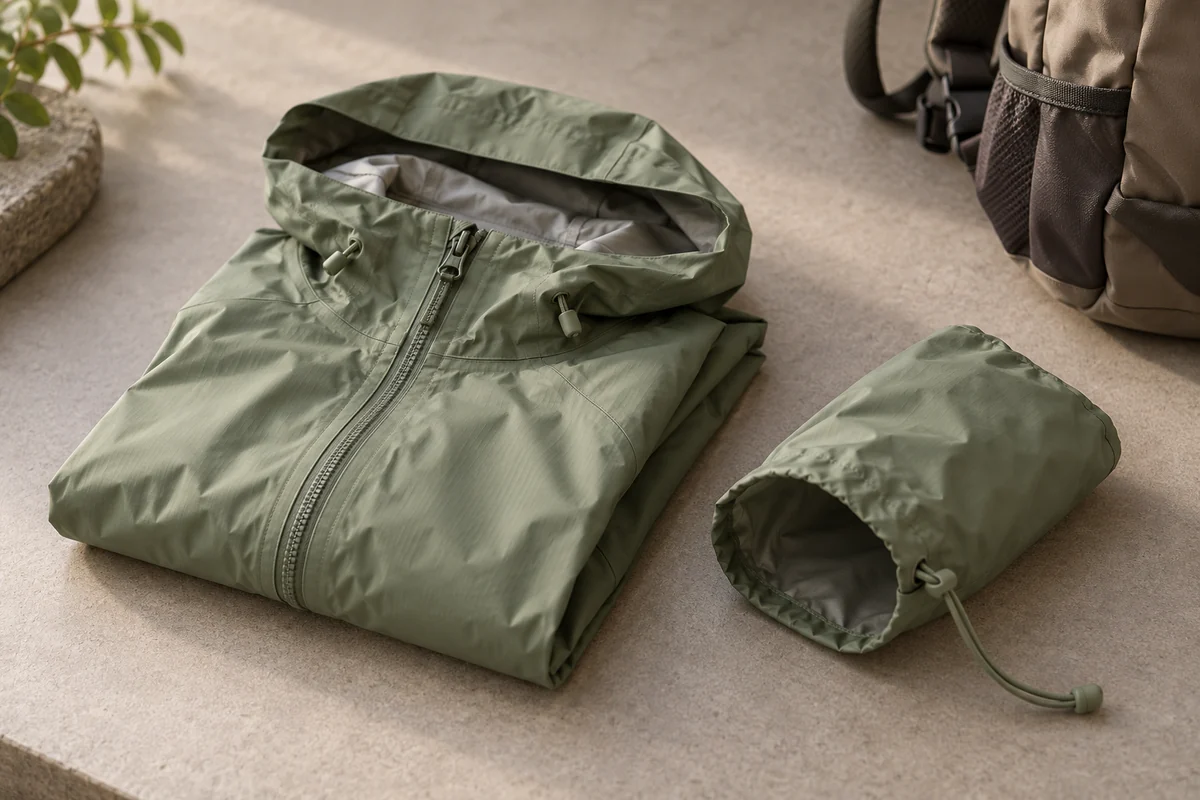
Folded sage green lightweight rain jacket beside a fabric carry pouch

Carry format and retail packaging are different decisions. A pouch used every day needs its own usability review even when the jacket is shipped in an individual retail pack.

CARRY FORMAT AND STORAGE

Design the packable experience around the finished jacket

For a packable rain jacket, agree what packable means in the project brief. Define whether the user folds or stuffs the garment, where it is stored and how the storage component attaches or travels with it. Confirm which garment size is used when recording the packed dimensions.

Evaluate the actual sample with its intended fabric, trims, lining and branding. A fabric change, larger size or added pocket can alter bulk and handling. Do not carry a packed size or garment weight from an early sample into the final specification without checking the approved configuration.

Review unpacking as well as packing

Ask the reviewer to pack the jacket without special instructions, retrieve it and put it on. Check closure access, pouch handling and the appearance after storage. Agree the storage and care guidance with the chosen material supplier rather than promising a universal storage method.

FABRIC FEEL AND CONSTRUCTION

Select materials for the way the jacket will be worn

Start with the intended hand feel, drape, sound, weight direction and contact with clothing or skin. Then review the face fabric, coating or laminate, inner finish and any lining as a complete package. Fibre composition alone does not describe the finished wearing experience or establish rain protection.

Request identifiable material references and the information needed for construction and care. A lighter fabric is not automatically the best choice for every travel range, and a lined jacket is not automatically more protective. Compare the proposed packages against the brief and the evidence available.

Development choiceWhat the buyer should compareWhat to record
Fabric hand and drapeHow the material hangs moves and sounds in the intended silhouette.Selected reference colour direction and approved swatch.
Inner finish and liningFeel against planned layers comfort at the collar and sleeve ease.Inner construction lining reference and finishing details.
Seam and closure constructionCompatibility between the selected material seam treatment and openings.Construction drawings trim references and checks for the sample.
Care and storageSupplier guidance for the selected finish and construction package.Reviewed care wording and any storage instructions for the finished product.

On small screens swipe the table to compare each column

RAIN PROTECTION AND EVIDENCE

Define the claim before comparing the numbers

Rain jacket describes a use direction. Waterproof describes a claim that needs a clear basis. The categories can overlap. A commuting raincoat may need a different fit and carry experience from an outdoor shell while still requiring a defined material and garment verification plan.

Surface wetting

Resistance to surface wetting and resistance to water penetration answer different questions. A spray result should not be presented as a complete jacket protection guarantee. Keep the finish requirement and the intended product claim separate in the specification.

Water penetration

ISO 811 describes a hydrostatic pressure method for fabrics. A result relates to the tested specimen and conditions. Record the material reference method edition units and pre treatment before using a result to compare candidates or support a requirement.

The assembled garment

Review seams closures pockets hood and cuff openings in the agreed construction. A fabric report does not automatically cover each detail in the finished coat. Define the additional checks needed for the intended claim and keep their scope in the approval record.

No universal protection value is assumed for this category. Performance targets and acceptance criteria belong in the project brief. Match any report to the selected configuration and review changes that could affect the relevant result.

CUSTOM AND PRIVATE LABEL RAIN JACKETS

Build a recognisable product around a controlled specification

Development can begin with a complete tech pack or a reference direction that needs further definition. Identify the features that are essential to your range and those open to discussion. Keep the styling decisions connected to material selection, construction and the order breakdown so the approved jacket remains commercially practical.

Shape fit and colour

Provide the target wearer size chart fit preference body length and intended underlayers. Share colour references and any colour matching process. Confirm the measurement points and size basis before reviewing changes across the range.

Branding and trim choices

Supply artwork placement dimensions and technique preferences. Consider how decoration interacts with the chosen material seams and folds. A trim or logo change after approval should be reviewed for construction appearance and any affected verification requirement.

Labels and carry components

Coordinate size labels care information hangtags and any storage pouch with the garment specification. Define whether the pouch is separate attached or integrated. Check artwork and labelling requirements for the intended destination and sales channel.

FROM BRIEF TO APPROVED SAMPLE

Use the sample to close the choices that matter

A useful sample review answers specific questions. Can the wearer move comfortably in a longer silhouette? Does the hood adjustment preserve the intended view? Can the finished garment be packed in the agreed way? Give each question an acceptance basis rather than relying on a general impression.

Keep comments photographs measurements and material references linked to one revision. A sample approval should identify what has been accepted and which items remain open. The final production reference includes the agreed garment details and relevant records rather than a photograph alone.

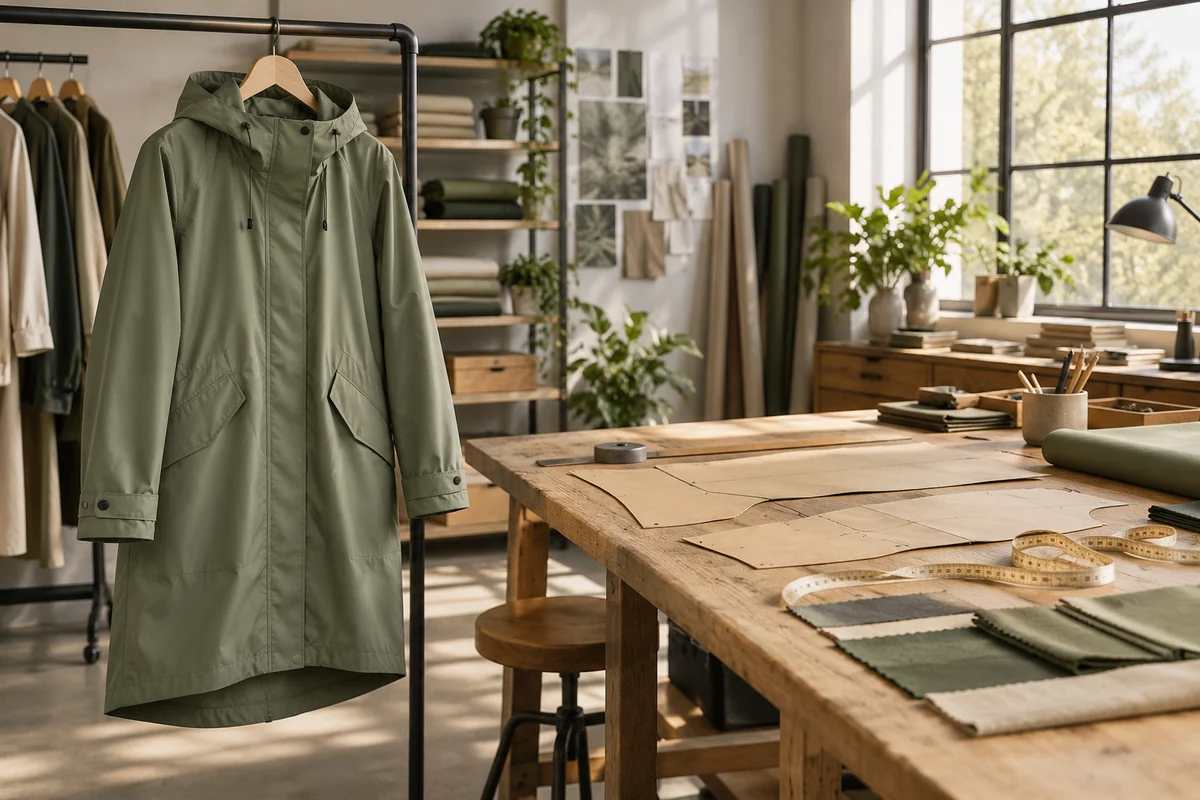
Sage green raincoat hanging beside paper patterns and fabric swatches in a development workspace

01

Agree the use and carry brief

Record the wearer rain exposure body coverage underlayers and storage preference. Mark decisions that still need development and identify who will approve the sample.

02

Choose the construction package

Select identifiable fabric lining trim and fastening references. Confirm the proposed seam treatment and any material information needed before sample construction.

03

Review fit in everyday movement

Check the sample over intended clothing. Walk sit reach and turn the head. Record hem hood sleeve and pocket feedback against the same sample revision.

04

Confirm packing and final details

Review the carry method artwork labels and packing assumptions. Approve changes in writing and decide whether a revision needs another sample or targeted check.

RISKS TO RESOLVE BEFORE BULK

Make the tradeoffs visible before the order is fixed

Procurement riskReview with the sampleKeep in the approval record
Added length restricts movementTest sitting stride and reaching in the planned clothing layers.Approved measurement chart fit comments and opening details.
A packable claim comes from an early versionPack the final size and construction with the intended carry component.Sample revision packing method and measured configuration.
A fabric change alters the garment experienceRecheck drape feel closures seam compatibility and relevant requirements.Changed material reference approval and checks completed.
Branding or a pouch is approved separatelyReview placement attachment and handling on the complete sample.Artwork dimensions construction detail and final carry format.
Care wording is copied from another jacketReview guidance for the actual materials finishes and assembly.Approved label artwork and the source of the care instructions.

On small screens swipe the table to compare each column

MOQ DELIVERY AND ORDER ASSORTMENT

Plan the order around the configuration you will actually buy

The total jacket quantity is only part of the commercial brief. A custom colour, branded fastening, separate carry pouch or broad size assortment can change sourcing and production assumptions. Share the proposed breakdown early so the quotation can identify what is included and which choices need confirmation.

Quantity and sourcing

Provide estimated units by style and colour with the size distribution. Include any expected repeat programme and carry component quantities. The applicable MOQ is confirmed after the material trim colour and production requirements have been reviewed.

Sampling and delivery

State the target delivery window and current project stage. Allow the plan to address material availability sample revisions artwork approval and relevant verification. A target date becomes a workable schedule when responsibilities and approval dependencies are agreed.

Packing and destination

Separate the user carry format from individual packing carton assortment and shipment requirements. Supply label layouts carton marks destination and any retailer instructions. Confirm commercial and shipping terms in the quotation for the actual order.

For a fair quotation comparison, use the same fabric package construction artwork size breakdown and packing basis. Ask each proposal to identify assumptions and exclusions. A lower price for a different lining pouch or verification scope does not describe the same product.

BUYER QUESTIONS

Rain jacket development FAQ

How is a rain jacket different from a waterproof jacket?

Rain jacket describes a use direction such as commuting travel or everyday rain coverage. Waterproof is a performance claim that needs defined evidence. The categories can overlap. Choose the wearing experience and construction for the project then agree the verification needed for the intended claim.

Can we develop a packable rain jacket with a carry pouch?

A pouch or integrated storage direction can be reviewed as part of development. Specify how the user packs carries and retrieves the garment. Confirm handling and packed dimensions on the selected sample size with the final material trims and branding rather than relying on a fabric weight alone.

Should a raincoat be longer than a regular jacket?

Length follows the intended coverage and wearing routine. Review the hem on the target wearer when walking sitting and reaching. A longer coat may need different movement details. Agree the fit and construction on a sample rather than assuming extra length always improves the product.

What materials should we include in the initial brief?

Share any preferred composition material reference hand feel lining colour direction and care requirements. Also describe the intended use and protection claim. The face material inner finish seam treatment and trims need to be reviewed as a complete package before a sample configuration is approved.

Can our rain jacket use custom colours and branding?

Colour direction artwork placement labels and trim preferences can be included in the development brief. Provide dimensions and reference files early. The proposed decoration and fastening choices need a construction review especially where they interact with seams openings or the carry format.

What determines the MOQ for a rain jacket project?

Fabric and trim sourcing custom colours style count size assortment carry components and production requirements inform the review. Send estimated quantities by style and colour with a size breakdown. The applicable MOQ is confirmed for the reviewed configuration in the project quotation.

How should we approve a rain jacket sample?

Use a written checklist covering measurements fit movement hood closures pockets carry method artwork and relevant verification. Record the sample revision material references comments and outstanding items. Approve the final configuration explicitly and review substitutions before they are used in production.

What information helps prepare a rain jacket quotation?

Provide a tech pack or reference intended wearer coverage and carry requirements material preferences size chart artwork quantities destination and delivery window. Include the protection claim and checks you need. Mark undecided items clearly so the quotation can state its assumptions and development scope.

PREPARE YOUR RAIN JACKET RFQ

Tell us how it will be worn
and how it will be carried

Bring the everyday routine and the order requirements together. A useful brief explains the wearer coverage fit storage format and protection needs alongside quantity branding and the target delivery window.

If the design is still taking shape share the references you have and identify the decisions where you need development input. A clear list of open choices helps define the next sample and quotation review.

Include these project inputs

  • Tech pack or reference garment and target wearer
  • Coverage length fit and intended underlayers
  • Carry format and storage component preference
  • Material direction and verification requirements
  • Quantity by colour and size with artwork and packing
  • Destination and target delivery window