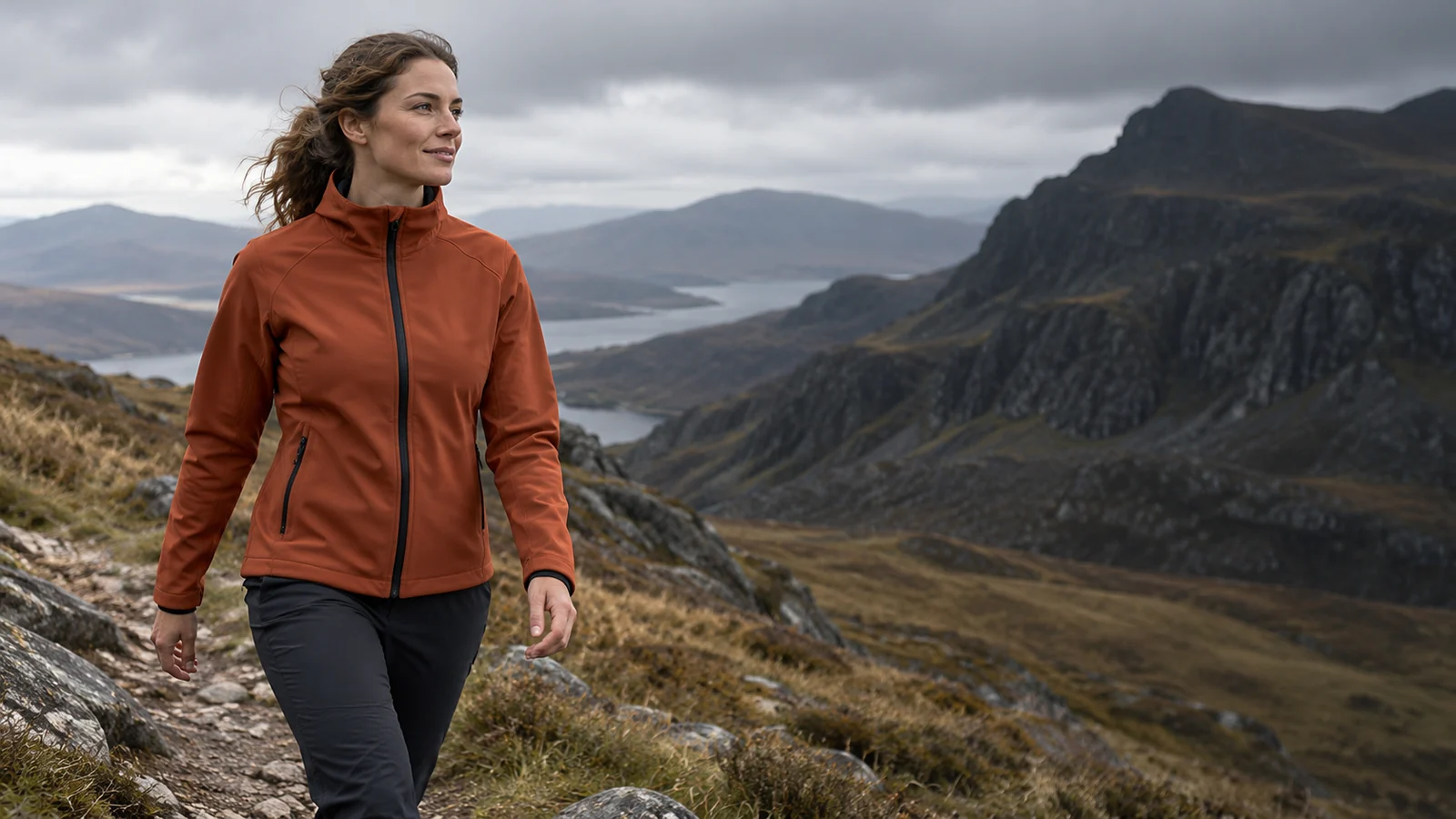
Woman wearing a rust softshell jacket while walking on an open highland trail

SOFTSHELL JACKETS OEM ODM PRIVATE LABEL

Softshell Jacket Manufacturer
for Active Layering

Develop a softshell jacket around movement, climate, layering and the surface durability your collection actually needs.

SNOSEAM works with brands and organizations on custom jacket development and manufacturing. Begin with a tech pack, a reference garment or a product direction. Use the sample to balance fabric stretch, airflow, inner comfort, fit and construction before bulk planning.

START WITH THE BALANCE

Four priorities shape the softshell brief

Softshell is a product direction rather than one fixed fabric or performance class. Two jackets can share the name while serving different activities and climates. Rank the four priorities before selecting materials so the sample has a clear job and compromises can be reviewed deliberately.

01

Movement

Define the reach bend and layering motions the sample must support.

02

Airflow

Describe wind exposure and activity instead of asking for generic breathability.

03

Inner comfort

Choose the backing or inner surface around the season and next to skin contact.

04

Surface durability

Identify abrasion zones equipment contact and appearance expectations.

A MATERIAL SYSTEM WITH A CLEAR JOB

Choose the wearing direction before the feature list

A useful brief describes the conditions and the person wearing the garment. State the activity level, expected wind and light precipitation exposure, temperature direction, underlayers and equipment. This makes it easier to decide whether the project needs a woven stretch shell, a bonded construction, a lighter unlined option or another jacket category.

The product name does not establish waterproofness, warmth, air permeability or abrasion resistance. Those requirements need their own material reference, test basis and sample review.

01

Active outdoor layer

Prioritize reach, recovery and a fit that works over the planned base or mid layer. Define the wind exposure and whether warmth comes from the bonded inner surface or from separate layers.

02

Everyday technical jacket

Balance a clean silhouette with practical pockets, easy handling and the intended fabric feel. Review noise, drape, collar contact and appearance after repeated wear.

03

Team and organizational apparel

Set the wearer group, size coverage, branding and repeat order expectations. Any occupational protection requirement must be specified separately and assessed for the intended market.

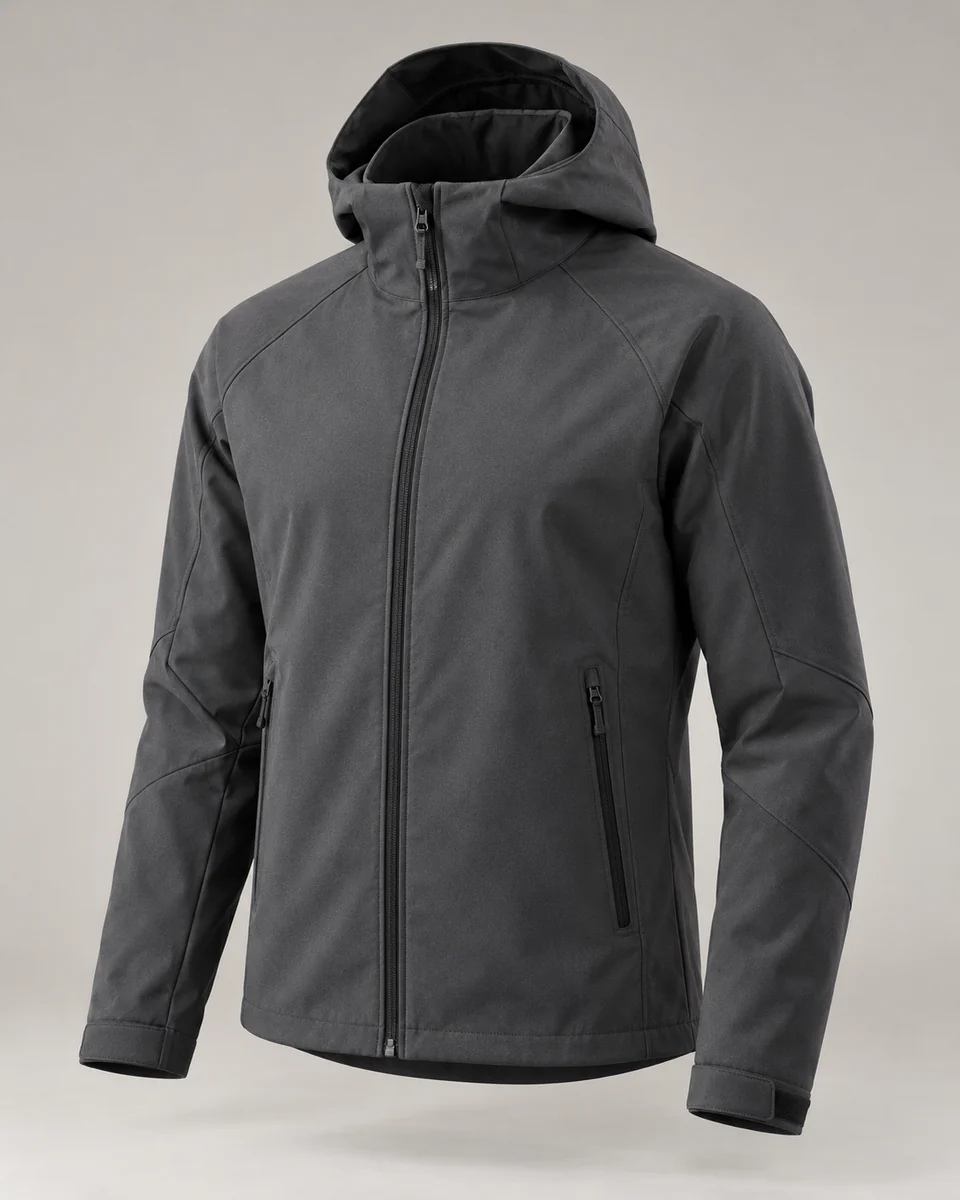
Charcoal hooded softshell jacket with articulated sleeves and two zip hand pockets
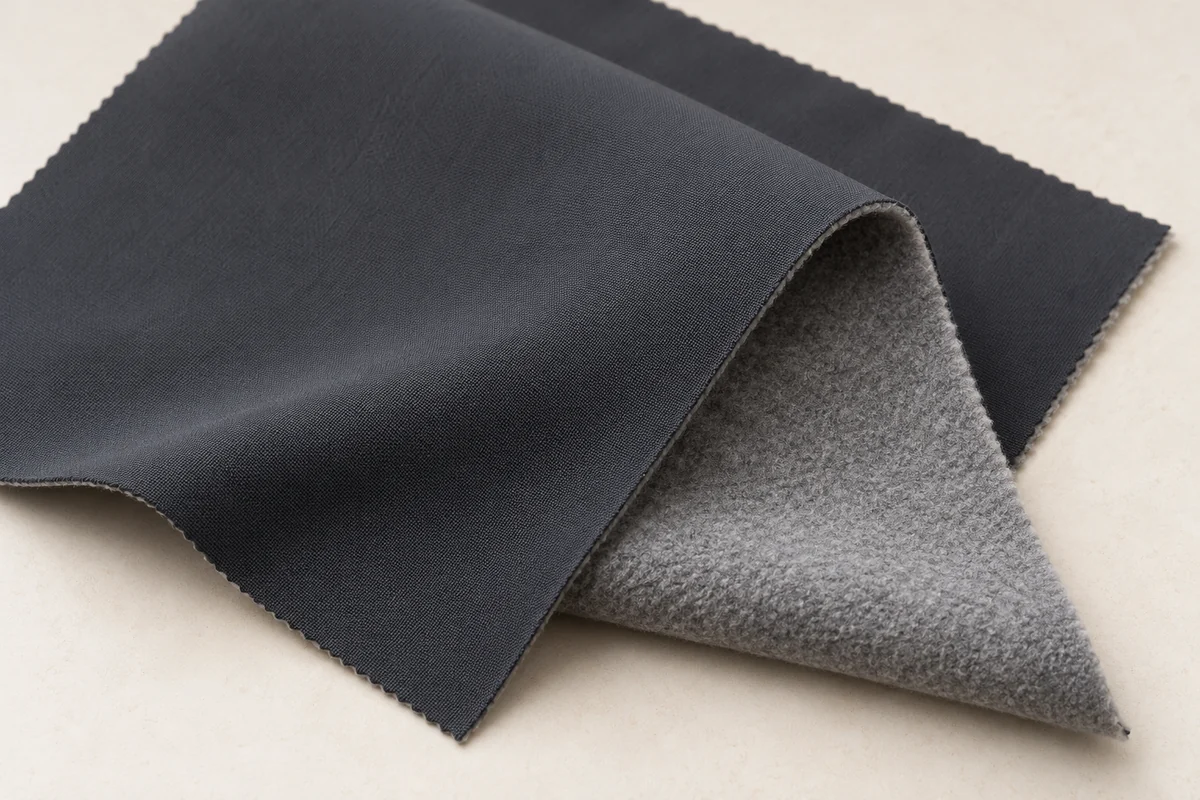
Dark woven softshell face fabric bonded to a grey microfleece inner surface

Read both sides of the material

A bonded softshell combines surfaces that need to work as one package. Review the outer face for appearance, handling and exposure. Review the inner surface for warmth, friction against layers, moisture feel and care. Keep the exact supplier reference and approved colour with the sample because a general fibre description does not identify the construction.

Keep the sample configuration visible

Compare candidate materials in the planned garment rather than relying on swatches alone. Panel direction, pocket bags, reinforcement, lining choices and seam bulk can change movement and comfort. Record which face is shown in each colour reference and how the material is oriented in production.

Material decisionQuestions for selectionApproval record
Face fabricWhat hand feel stretch direction surface appearance and equipment contact must it handle?Supplier reference composition colour and approved swatch.
Barrier or filmIs a barrier proposed and what airflow or weather requirement is it intended to address?Exact construction reference and agreed evidence scope.
Inner surfaceHow much warmth friction and next layer comfort should the wearer experience?Backing or inner finish linked to the approved sample.
Finish and careWhat surface finish claim and care routine are expected for the market?Finish reference care review and any preconditioning used for tests.
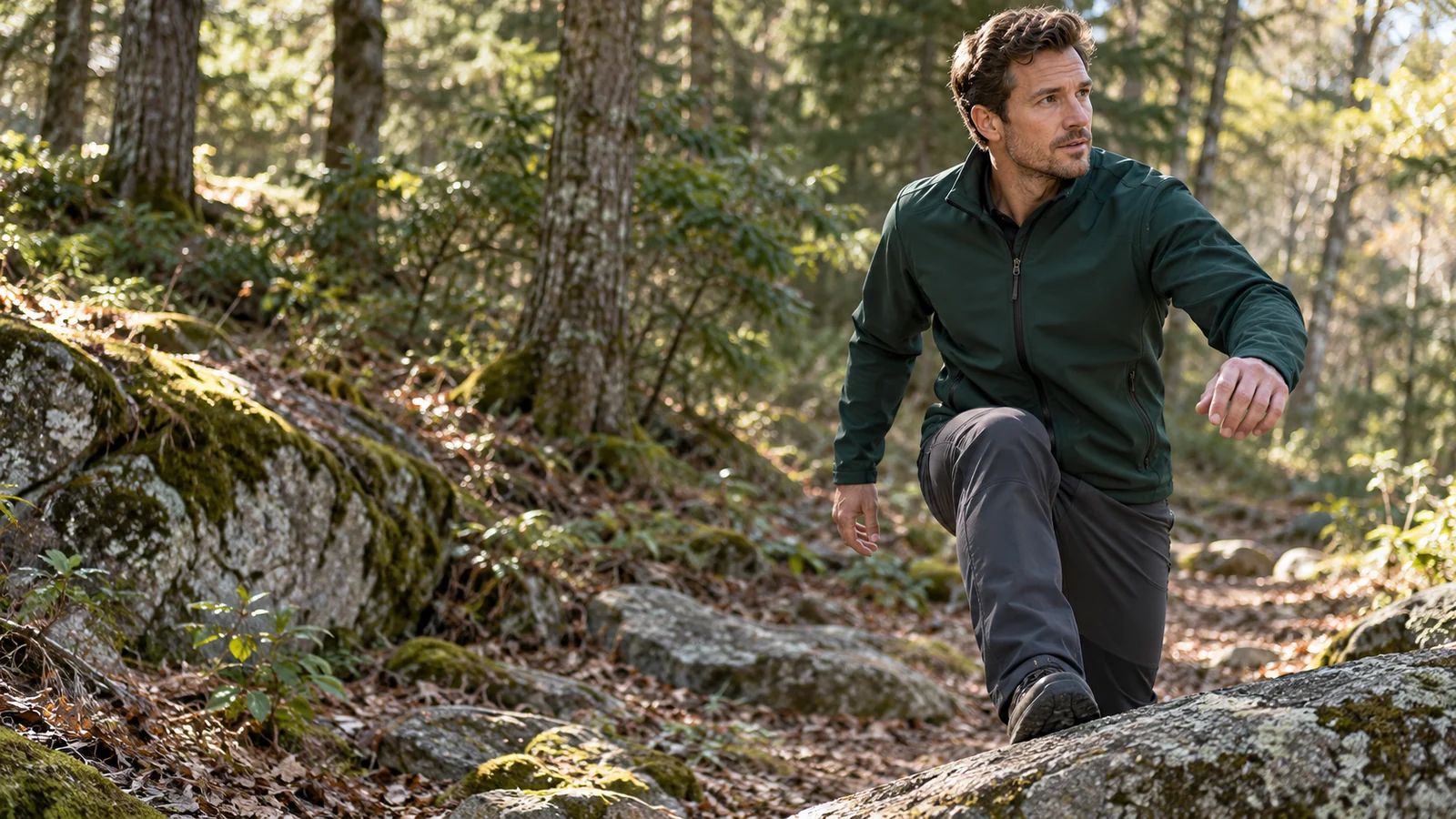
Man wearing a green softshell jacket while stepping over a boulder on a woodland trail

MOVEMENT IS A GARMENT RESULT

Review stretch pattern and layering together

The wearer experiences a complete jacket, not a fabric value. Build a short movement routine for the target activity and keep it consistent across sample reviews. Photograph or record the test size, underlayers and comments so fit decisions remain tied to one configuration.

Stretch direction and recovery

A high stretch percentage alone does not describe recovery, force or garment movement. Confirm the direction used in panels and compare the material after repeated extension under the agreed method.

Pattern shape and local ease

Restricted reach may come from sleeve angle, armhole shape or local ease rather than the fabric alone. Make targeted pattern changes and review the same movements after each revision.

Layering and contact points

Test the sample over the intended base or mid layer. Check collar, underarm, cuff, hem and pocket access while reaching, bending and carrying the expected equipment.

CONSTRUCTION THAT SUPPORTS THE BRIEF

Build the details around use and handling

Every added detail should answer a wearing or brand need. Keep the approved trim references and construction drawings connected to the sample. If a zipper, panel, hood or cuff changes after approval, review the affected fit, appearance and verification requirement before the change enters bulk planning.

Front closure

Specify zipper type length puller and any inner guard. Check operation under tension and the way the top finish contacts the chin.

Pockets

Define access position opening size pocket bag and expected contents. Review access with a pack or harness when relevant.

Hood and collar

Choose the direction around coverage visibility movement and layering. A hood can be removable adjustable or omitted according to the brief.

Cuffs and hem

Confirm the closure or adjustment method and how it works with gloves and layers. Review exposed hardware and cord management for the wearer group.

Panel layout

Use panel lines to support shaping movement and design intent. Keep stretch direction and any reinforcement placement visible in the pattern record.

Branding and labels

Provide artwork size position technique care information and destination needs. Review decoration on the selected material before approval.

PERFORMANCE AND VERIFICATION

Define what each result needs to prove

Separate material tests from garment review. A report is useful when the method, edition, specimen, conditioning, units and acceptance criteria are clear. Match each result to the exact material or configuration being ordered and avoid treating unrelated methods as interchangeable.

Elasticity and recovery

ISO 20932 1 describes strip methods for measuring fabric elasticity and related properties. For a project comparison, record the direction, procedure, extension conditions, cycles and material reference. Link the test to the panel orientation used in the sample.

ISO 20932 1 fabric elasticity strip tests

Air permeability

Air permeability can help compare materials under a common method, but it does not represent every garment opening or activity condition. Agree method details and units, then review closures, cuffs, hem and any ventilation as part of the finished sample.

ISO 9237 fabric air permeability method

Abrasion resistance

ISO 12947 2 addresses specimen breakdown by the Martindale method and notes a limitation for coated fabrics. Choose a method appropriate to the exact construction and claim. Record loading, endpoint, material face and any conditioning.

ISO 12947 2 Martindale specimen breakdown

Do not infer waterproofness, warmth or universal durability from the word softshell. If the project needs a rain claim, water vapour requirement, specialist protective function or market specific compliance, define it separately and review the suitable evidence with the responsible technical team.

CHOOSE THE RIGHT JACKET DIRECTION

Place softshell in the wider collection

Product directionUseful starting priorityDo not assume
Softshell jacketMovement surface durability airflow balance and inner comfort.That every softshell is waterproof or has the same warmth and stretch.
WindbreakerA lighter outer layer with a defined airflow and carry brief.That low weight alone establishes protection or packability.
Fleece jacketWarmth texture layering and surface performance of the fleece construction.That fleece provides the same wind or weather barrier as a bonded shell.
Waterproof jacketA water protection claim supported by suitable material and garment review.That a fabric result automatically covers seams and openings.
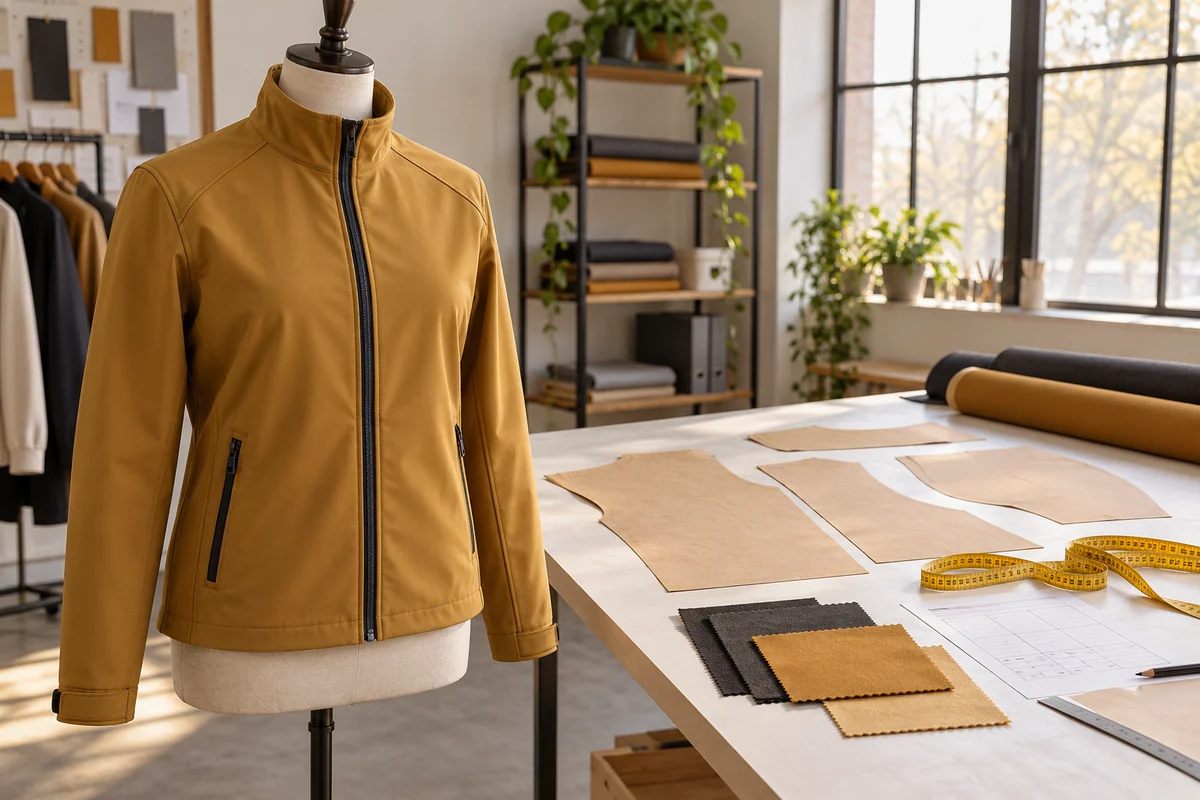
Ochre softshell jacket beside pattern pieces fabric swatches and measuring tools for sample review

SAMPLE DEVELOPMENT

Turn open choices into one approved reference

A sample should answer specific decisions. Keep material comments, fit changes and trim approvals with the same revision. When several reviewers are involved, identify who closes each area and which record becomes the production reference.

Approval should be written and traceable. A photograph or informal message can support the review, but it should not replace the measurement chart, construction record, material references and list of remaining actions.

01

Approve the material package

Record the face fabric barrier or bond inner surface colour and trim references.

02

Review fit in motion

Use the agreed size underlayers and movement routine with comments tied to one revision.

03

Close construction details

Check closures pockets hood collar cuffs hem internal finish and branding placement.

04

Confirm evidence and claims

Match reports and sample checks to the approved material and intended wording.

05

Release one production reference

Close drawings measurements artwork packing and unresolved items before bulk planning.

PROCUREMENT RISKS AND ORDER PLANNING

Make the quotation match the approved jacket

Risk to closeReview before bulkKeep in the order record
A generic softshell description replaces the material identityConfirm the exact fabric package colour and orientation.Supplier references swatches and approved sample.
Stretch results are compared without direction or conditionsAgree the method orientation procedure and material reference.Test scope acceptance criteria and report identity.
Fit is approved without the intended layersRepeat the movement routine with the specified size and underlayers.Measurements fit comments and sample revision.
A trim or panel changes after approvalAssess effect on movement appearance construction and claims.Change approval and any required recheck.
The delivery target assumes every decision is closedInclude sourcing sample revisions testing artwork and packing.Responsibilities open items and confirmed order schedule.

MOQ and assortment

Share estimated quantities by style and colour with size distribution and any repeat programme. Material minimums, custom colours, trim choices and the number of configurations affect the review. Confirm the applicable MOQ for the actual project in the quotation.

Development and timing

State the required delivery window and current project stage. Sampling and production timing depend on material availability, revision cycles, approvals and relevant checks. Keep the target date separate from a schedule confirmed against a complete order.

Packing and destination

Provide individual packing, labels, carton assortment, carton marks and destination details. Include retailer or distributor instructions early. Commercial and shipping terms are confirmed within the reviewed order rather than assumed from this page.

BUYER QUESTIONS

Softshell jacket development FAQ

Use these questions to prepare the technical and commercial discussion before sample work begins.

What makes a jacket a softshell?

Softshell commonly describes a flexible outer layer that balances movement weather exposure airflow surface durability and inner comfort. It is not one standardized fabric or performance class. Define the actual material construction intended use and evidence required for your project.

Is a softshell jacket waterproof?

Do not assume waterproofness from the category name. Some constructions may address light weather exposure while other projects prioritize airflow or movement. If a water protection claim is required define the material and garment criteria seam treatment and verification plan separately.

How should we specify stretch and recovery?

State the movement need and fabric direction then agree the method procedure extension conditions cycles and acceptance criteria. Keep the tested material reference and direction connected to panel orientation in the sample. Review garment movement separately from the fabric result.

Can we choose a bonded fleece inner surface?

A bonded inner surface can be reviewed for warmth feel friction against layers and care. Confirm the complete bonded material reference rather than selecting the face and backing independently. Check seam bulk movement and comfort in the intended sample configuration.

Can we use our own fit colours and branding?

Provide the target wearer size chart underlayers colour references artwork dimensions placement and technique. Review these choices with the selected material and construction. Keep approvals recorded and assess changes before they are used in the order.

What determines MOQ and production timing?

Material minimums custom colours trims style count size assortment approval steps and testing requirements inform the review. Share quantities by style and colour with your target delivery window. The applicable MOQ and schedule are confirmed for the reviewed configuration.

How many samples should we expect?

The sample plan depends on how complete the brief is and how many material fit construction and artwork decisions remain open. Give each sample a clear purpose and close comments against one revision. Confirm the project specific sequence during the development review.

What should we send for a softshell jacket quotation?

Send a tech pack or reference intended wearer and activity layering direction material preferences size chart quantities colour and artwork requirements verification needs packing destination and delivery window. Mark open decisions so the quotation can explain assumptions and development work.

PREPARE YOUR SOFTSHELL JACKET RFQ

Bring the movement brief
and the choices still open

Tell us who will wear the jacket, how they will move, what they will wear underneath and which conditions the garment must address. Connect that use case with material direction, fit, construction and order requirements so the first review has a clear purpose.

You can begin with the references you have. Identify where you need development input and which requirements are fixed. Keep intended claims, quantity assumptions and target delivery window explicit.

Include these project inputs

  • Tech pack reference garment or product direction
  • Target wearer activity climate and layering system
  • Material preferences and verification requirements
  • Size chart movement checks and garment details
  • Quantities colour breakdown and artwork
  • Packing destination and delivery window