Hiker wearing a burnt orange windbreaker on an open grassy ridge

WINDBREAKERS OEM ODM PRIVATE LABEL

Windbreaker Manufacturer
for Movement and Everyday Layers

Build a lightweight outer layer around the activity, the airflow balance and the way your customer carries it.

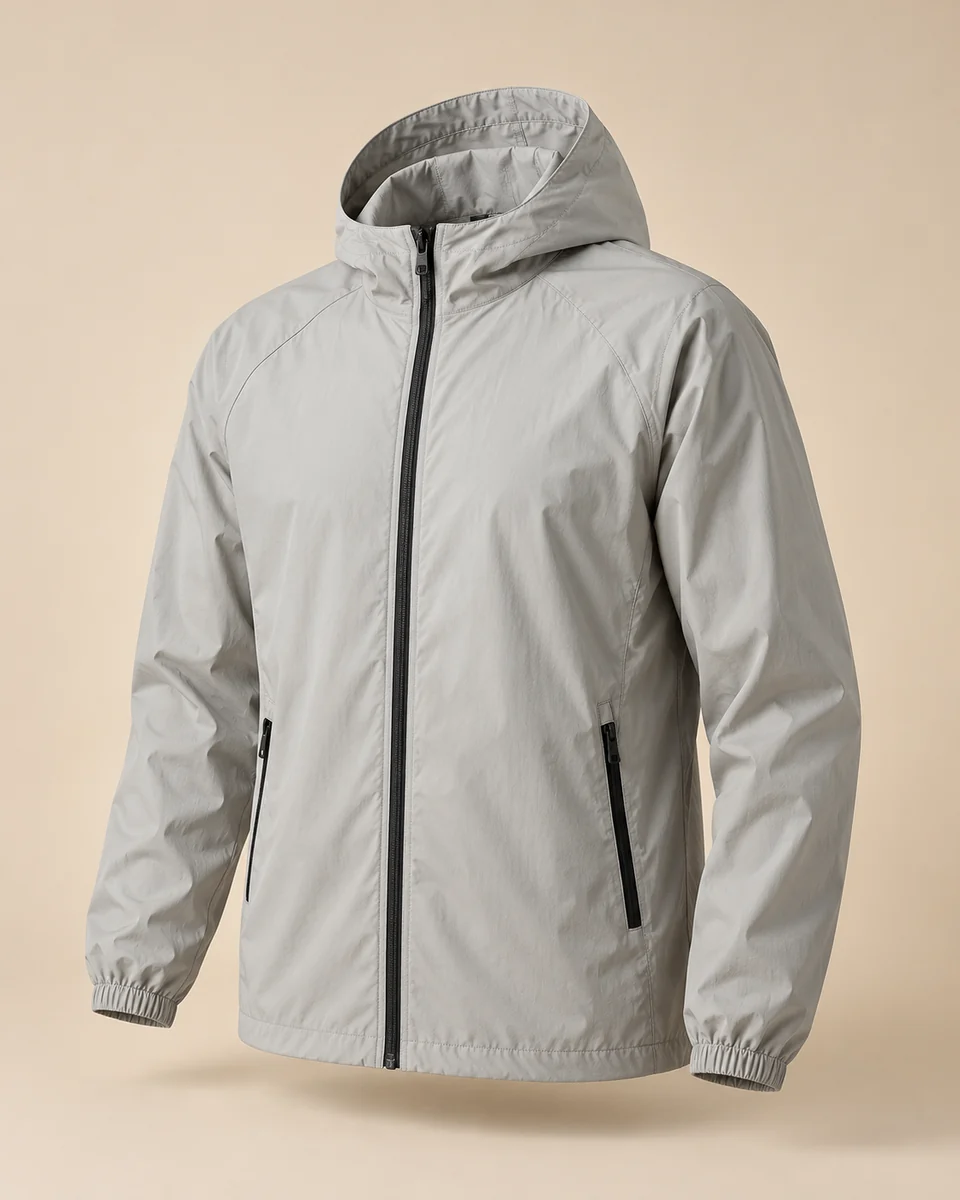
Stone grey hooded windbreaker with full front zipper zip pockets and elastic cuffs

A LIGHT LAYER WITH A CLEAR JOB

Start with what the wearer needs between layers

SNOSEAM works with brands and organizations on custom jacket development and manufacturing. For a windbreaker project, bring the intended wearer, activity and layering system into the first conversation. A compact walking layer, an active collection piece and a casual team jacket can share a lightweight appearance while needing different fabrics, fits and details.

Start with your tech pack, a reference garment or a clear product direction. Describe the balance you want between resistance to airflow, comfort during movement, fabric feel and carry volume. These priorities help frame material selection and a sample that can be reviewed against a useful brief.

The final construction, measurements and performance requirements are confirmed for the selected project. This category introduces development choices rather than a fixed stock specification or a universal wind protection rating.

Activity

How hard and how long will the wearer move?

Layering

What will be worn underneath and carried over it?

Carry format

Where will the jacket go when it is taken off?

CHOOSE THE WEARING PRIORITY

Four starting points
for a more useful product brief

Choose the direction that best describes the main job of the jacket. If your collection serves several occasions, identify the priority and the compromises you are prepared to accept before adding features.

01

Active everyday movement

For walking, light outdoor activity and changing routines, define sleeve reach, body ease and the intended base layer. Compare fabric feel and airflow requirements with the proposed openings. A close athletic silhouette and a relaxed everyday layer should not be reviewed against the same fit assumptions.

02

Travel and compact carry

Prioritize the storage method, handling and space available in the intended bag. Review the complete garment with its actual zipper, pockets and branding. A low fabric weight does not establish the packed dimensions of every size or mean that the jacket is the easiest option to put on and carry.

03

Lifestyle collections

Balance drape, surface appearance, sound and the silhouette your range needs. A clean casual windbreaker may use a different collar, hem or lining direction from an activity focused style. Confirm those choices on the garment rather than assessing a fabric swatch as if it were the finished jacket.

04

Team apparel programmes

Define the wearer group, size distribution, branding and expected repeat orders. Check fit over the clothing used by the team and include relevant care and identification requirements. Any occupational protection requirement needs its own assessment and should not be inferred from the windbreaker category.

FABRIC FIRST THEN THE FULL GARMENT

Compare weave feel and finish as a complete material choice

Review identifiable fabric references rather than selecting only by fibre name or the word lightweight. Consider surface feel, drape, sound, weight direction, stretch requirements and the inner finish. Keep the proposed lining and pocket bag materials visible in the same review because they contribute to the finished garment experience.

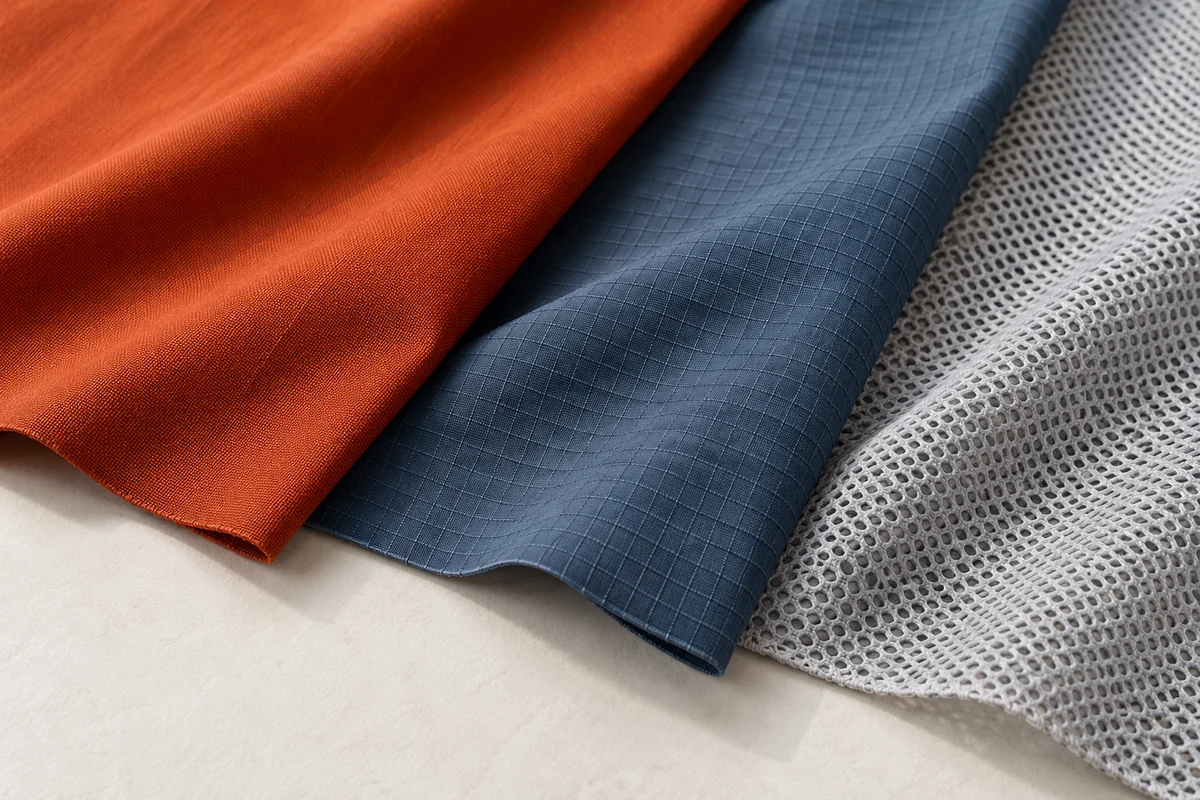
A ripstop grid describes a construction feature. It does not by itself prove wind resistance, durability or suitability for your intended use. Compare the candidate materials against an agreed requirement and request the information needed to support any claim.

Rust plain weave slate blue ripstop and grey mesh fabric swatches for windbreaker selection
Material decisionCompare in the reviewKeep in the specification
Weave and fabric referenceHand feel drape surface texture and the intended airflow requirement.Supplier material reference composition and approved swatch.
Weight and inner finishThe selected shell with pocket bags lining and the planned underlayers.Agreed material package and sample configuration.
Stretch and movementWhether the proposed material and pattern provide the required reach and comfort.Material direction pattern measurements and fit comments.
Colour and decorationAppearance of the chosen colour and compatibility with the proposed branding.Approved colour reference artwork and decoration review.

On small screens swipe the table to compare each column

AIRFLOW AND VERIFICATION

Turn wind resistance
into a defined requirement

Decide what your intended product claim needs to mean before comparing supplier descriptions. Air movement through a material, garment ventilation and moisture comfort are related design considerations, but they are not one interchangeable measurement.

Compare air permeability on a common basis

ISO 9237 and ASTM D737 provide methods for assessing textile air permeability. If a project uses an air permeability requirement, agree the method and edition, test pressure, specimen area, units, conditioning and material reference. Read the report scope before treating two values as a direct comparison.

Separate the material result from the wearing review

A fabric result does not describe every opening in a jacket or how the complete garment feels during activity. Review the front closure, neck, cuffs, hem and any ventilation features alongside the selected material. Record what is tested and what is assessed on the sample.

No universal air permeability value, windproof promise or activity rating is assumed for this category. State your required claim and acceptance criteria in the brief. Changes to fabric, finish or garment openings should trigger a review of the affected requirement before approval.

OPENINGS VENTILATION AND ADJUSTMENT

Control the details
that change the wearing experience

Make the garment details work with the material direction. A front opening, a ventilation panel and a close fitting cuff each contribute differently to handling and comfort. Adding every available feature can create a more complicated jacket without improving the main wearing task.

Review ventilation as a construction detail

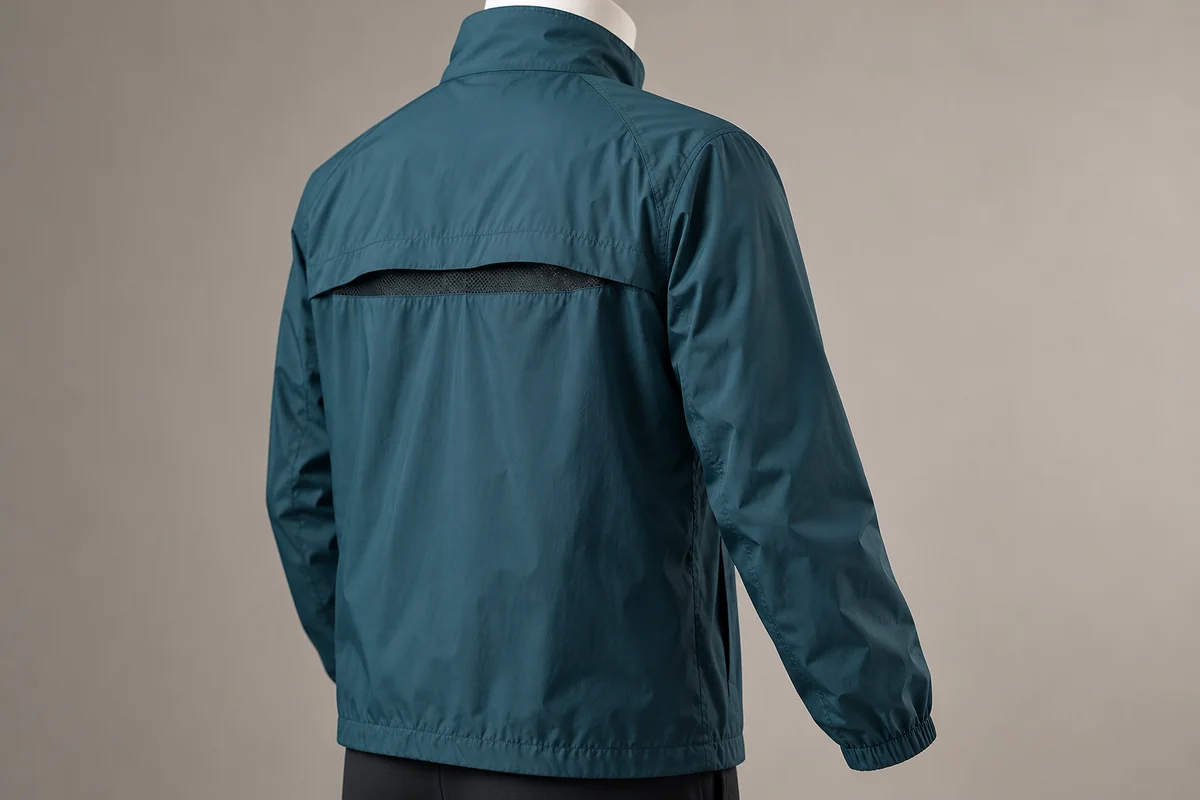
If the design includes a back opening or mesh panel, specify its position, coverage and assembly. Check how it sits during movement and under a daypack. Review the complete sample rather than using the presence of a vent as proof of a particular comfort outcome.

Keep closures and adjustments practical

Confirm zipper operation, collar contact, cuff fit and hem adjustment with the intended wearer. Keep the hardware and attachment details consistent with the sample. Where an adjustment cord or fastening is proposed, review its suitability for the wearer group and applicable product requirements.

Rear view of a teal windbreaker with an overlapping ventilation yoke and mesh opening

One construction reference

Keep the drawing material references and approved sample aligned. A change to a panel opening or trim needs a recorded review rather than a silent substitution.

FIT IS PART OF THE FUNCTION

Review movement
with the intended layers

Fit approval should describe more than chest and body length. Use the planned base layer or mid layer, then check reaching, bending, arm movement and the collar when the jacket is fully fastened. If a backpack is part of the use case, include it in the review.

Define the measurement points, size chart and tolerances before grading. A larger overall measurement is not always the right response to restricted movement. Pattern shape, sleeve position and local ease may need a targeted change instead.

01

Reach

Check the sleeve and body when the arms move forward and overhead.

02

Layer

Review the collar armhole and body over the clothing the customer will use.

03

Carry

Confirm pocket access and comfort with the intended bag or equipment.

AFTER THE JACKET COMES OFF

Make compact carry a sample decision

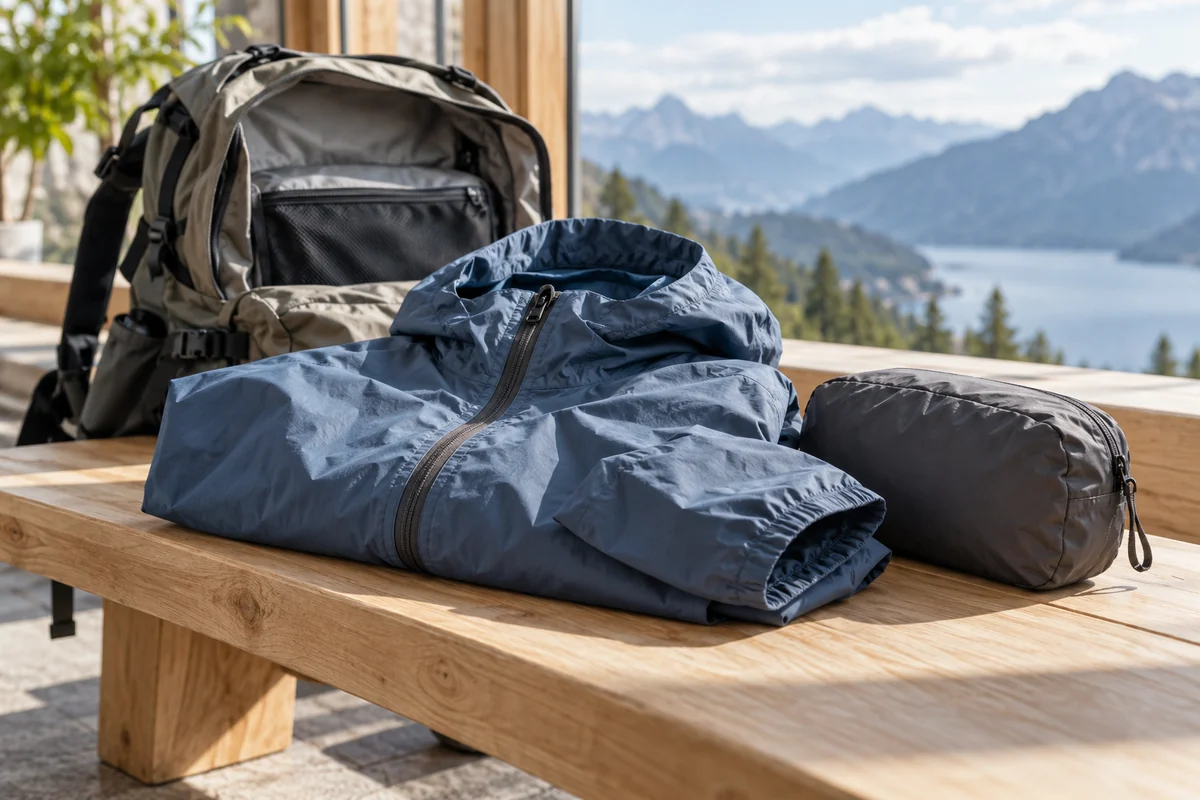
Folded slate blue lightweight windbreaker beside a zip pouch and open daypack

A compact windbreaker needs a clear storage brief. Choose whether the user folds the jacket, stuffs it into an integrated pocket or uses a separate pouch. Define which size and configuration are used when recording packed dimensions or garment weight.

Assess the complete approved sample. Extra pockets, a lining, different branding or larger sizes can change the way the garment packs. Keep any published carry claim linked to the configuration that was actually reviewed.

Check the whole packing routine

Ask the reviewer to pack the garment, retrieve it and put it back on. Consider handling, closure access and appearance after storage. Agree care and storage wording for the selected material package. The user carry component is a separate decision from retail packing and export carton assortment.

SELECT THE RIGHT PRODUCT DIRECTION

Where a windbreaker fits in your jacket range

Use the main wearing requirement to choose the development route. Product names can overlap, so keep material, construction and evidence requirements explicit instead of assuming every jacket in a category performs alike.

DirectionA useful starting priorityDo not assume
WindbreakerA lighter outer layer with a defined airflow and movement brief.That every windbreaker has the same rain resistance or comfort result.
Rain jacketRain exposure coverage closures and the way the garment is carried.That surface water repellency establishes a complete waterproof claim.
Waterproof jacketA defined water protection claim supported by appropriate verification.That a fabric report automatically covers every finished garment detail.

On small screens swipe the table to compare each column

CUSTOM AND PRIVATE LABEL DEVELOPMENT

Give your collection
a clear specification

Bring your own design or start from an agreed development direction. Separate fixed brand requirements from choices that can be reviewed. Keeping that distinction visible helps the sample process and makes the commercial assumptions easier to assess.

Silhouette and size range

Provide the target wearer body length sleeve direction size chart and layering preference. Confirm the grading basis and any fit differences between the styles in the collection.

Colour and branding

Share colour references artwork dimensions placement and technique preferences. Review decoration on the actual material and record whether a change affects construction or verification.

Pockets and internal finishing

Specify pocket locations access requirements lining direction and internal appearance. Review the added handling and bulk alongside the desired carry format.

Labels and presentation

Coordinate care information size identification hangtags and any pouch artwork. Keep destination requirements and sales channel instructions within the approval package.

DEVELOPMENT AND SAMPLE APPROVAL

Move the project forward
one clear approval at a time

A sample should resolve questions that a sketch or swatch cannot settle. Define what each review needs to establish and keep the comments tied to one revision. Avoid allowing several material options or informal fit comments to become competing production references.

Keep these records together

  • Approved material and trim references
  • Measurement chart and fit comments
  • Construction and artwork revisions
  • Verification scope and acceptance criteria
  • Carry method and packing instructions

01

Define the decision brief

Agree the wearer activity layering airflow requirement design direction quantity assumptions and target delivery window. Identify the open choices and the person responsible for approval.

02

Select materials and build the sample

Record the shell inner finish trims colour and pattern basis. Use the same references in the drawing and sample so comments have a clear starting point.

03

Review fit function and carry

Check movement openings collar cuffs pocket access and packing. Record measurements photographs comments and any verification needed against the sample revision.

04

Approve the production reference

Close material artwork and construction decisions in writing. Confirm the order assortment acceptance criteria and change review process before bulk planning.

PROCUREMENT RISKS MOQ AND TIMING

Make the quotation match the jacket you approve

Risk to closeReview before bulkKeep in the order record
Different fabric results are compared as one numberConfirm the method conditions units and tested material reference.Agreed requirement report scope and selected material.
The lightest option changes the intended experienceReview feel opacity handling and construction with the actual sample.Approved fabric package and fit reference.
A vent pocket or lining changes after approvalAssess the effect on use construction bulk and relevant claims.Revision approval and any checks required.
A target date assumes all inputs are settledInclude sourcing sample revisions artwork and verification dependencies.Confirmed responsibilities open items and order schedule.

On small screens swipe the table to compare each column

MOQ and order assortment

Share estimated quantities by style and colour with the size distribution and any repeat programme. Material sourcing custom colours trim choices and carry components affect the review. Confirm the applicable MOQ for the actual configuration within the quotation.

Development and delivery

State the required delivery window and which approvals are complete. Sampling and production timing depend on the brief material availability revisions and relevant checks. Keep a target date distinct from a schedule agreed against a complete order.

Packing and destination

Provide individual packing label artwork carton assortment carton marks and destination information. Include retailer or distributor requirements early. Commercial and shipment terms are confirmed for the proposed order rather than assumed from a category page.

BUYER QUESTIONS

Windbreaker development FAQ

Use these questions to prepare the technical and commercial discussion before sample work begins.

Is a windbreaker the same as a waterproof jacket?

No. The windbreaker brief centres on the intended airflow balance lightweight wearing experience and garment details. Water protection is a separate requirement. If your range needs a rain or waterproof claim specify the construction and verification needed rather than assuming the category name establishes it.

How should we specify wind resistance?

Define the intended claim and agree a material assessment method with the technical reviewer. When using air permeability results keep the method edition pressure specimen area units conditioning and material reference clear. Review garment openings and the complete sample separately from the fabric result.

Does a ripstop fabric automatically make a better windbreaker?

A ripstop grid is a fabric construction feature rather than a complete product specification. Compare identifiable materials for the intended feel appearance movement and performance requirements. Confirm the selected material and any supporting evidence before approving the jacket configuration.

Can we develop a packable windbreaker?

A separate pouch integrated storage pocket or simple folding direction can be reviewed in development. Define the user routine and check the final sample size with the intended fabric trims and branding. Record the packing method and configuration behind any dimensions or weight claim.

Can a windbreaker include ventilation panels?

Ventilation details can be discussed as part of the construction brief. Specify position coverage mesh and assembly then check the sample during movement and with any intended backpack. A visible opening alone does not establish a particular comfort outcome or replace material verification.

Can we use our own fit colours and branding?

Provide the wearer size chart layering preference colour references artwork dimensions and placement. The proposed options are reviewed with the material and construction package. Record approvals and review changes that affect the garment before they are used in the order.

What determines MOQ and production timing?

Material and trim sourcing custom colours style count size assortment carry components and approval requirements inform the review. Share quantities by style and colour and the target delivery window. The applicable MOQ and schedule are confirmed for the reviewed configuration in the quotation and order plan.

What should we send for a windbreaker quotation?

Send a tech pack or reference intended activity and wearer layering direction material preferences airflow and other verification requirements size chart quantities artwork packing destination and delivery window. Mark open decisions so the quotation can explain its assumptions and any development work required.

PREPARE YOUR WINDBREAKER RFQ

Bring the activity
the layers and the open choices

Tell us who will wear the jacket how they will move and what they will wear underneath. Connect that wearing brief with the material direction carry format and order requirements so the next review has a clear purpose.

You can begin with the references you have. Identify where you need development input and which requirements are already fixed. Keep the intended claims quantity assumptions and target delivery window explicit.

Include these project inputs

  • Tech pack reference garment or design direction
  • Activity target wearer and layering system
  • Material preferences and verification requirements
  • Size chart carry format and garment details
  • Quantities colour breakdown and artwork
  • Packing destination and delivery window