PROCUREMENT GUIDE

How to Specify a Waterproof Jacket for OEM Production

Prepare a brief that supports comparable quotations, a clear sample review and a controlled production reference.

Start with the buying task

A useful waterproof jacket RFQ defines the wearer, environment and acceptance requirements before asking for a price. Separate fixed requirements from development options and items that need testing. The aim is to compare quotations for the same garment configuration.

1 Define the intended use

State the activity, expected rain exposure, movement, layering, garment-care conditions and destination market. A commuter shell, a technical outdoor jacket and a workwear garment may need different coverage, fit, storage and validation. Explain which requirements are mandatory and which can be reviewed against cost.

2 Describe the fabric system

Specify the known composition, fabric construction, weight, membrane or coating reference, lining and surface finish. If these choices are open, provide a reference swatch or garment and describe the required feel and use. Do not treat a fabric name as proof of finished-garment performance.

Discuss the complete material package, including seam tape and trims. Record approved alternatives rather than allowing an unspecified substitution after sample approval.

3 Make performance requirements comparable

A waterproof or breathability number needs a method, unit, tested sample and acceptance condition. Ask whether the evidence covers the material or the completed garment, which construction was tested, and whether the test relates to the proposed production material.

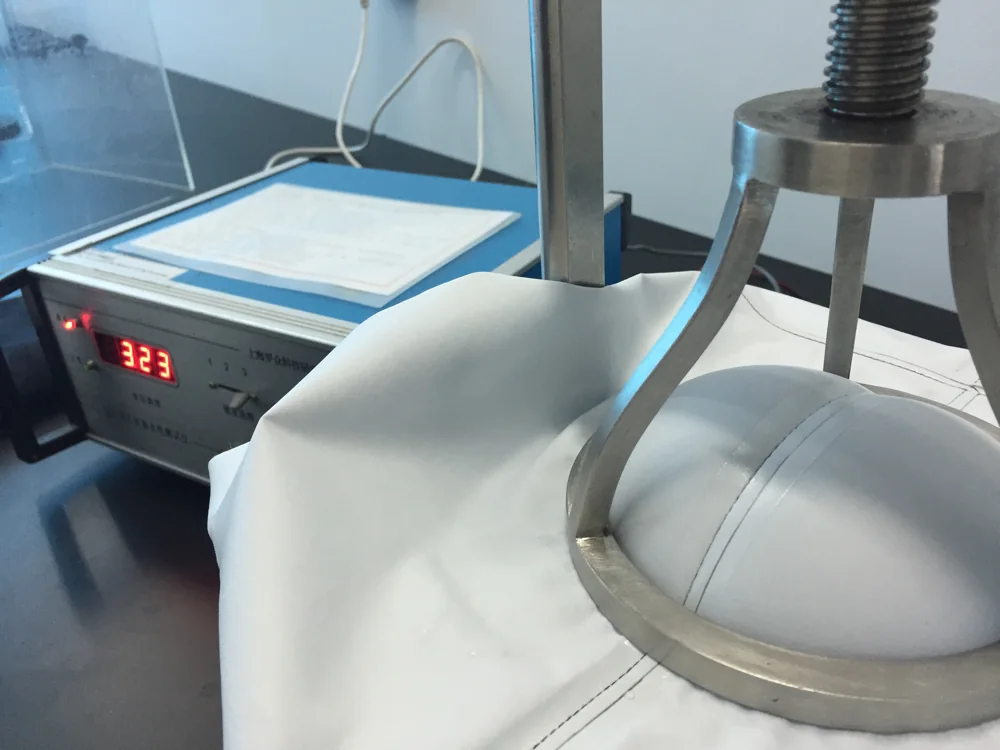
Hydrostatic testing evaluates resistance to water penetration under defined conditions. Water-vapour resistance and moisture-vapour transmission methods describe different measurements; values from different methods should not be treated as interchangeable.

Record the applicable method, conditioning, any washing or ageing requirement, report date and acceptance criterion in the specification. A material report alone does not verify every seam, closure and opening in a finished jacket.

Hydrostatic testing equipment for reviewing waterproof performance evidence

4 Review seams closures and openings

Confirm seam treatment, tape compatibility, closure construction and the intended hood, cuff and hem adjustment. Ask which details are present on the reference sample and which require development. Exterior photographs cannot establish the internal seam treatment.

Use annotated photographs or construction drawings to record the agreed details. Where garment-level validation is needed, agree the procedure and acceptance condition before the production sample is approved.

5 Define fit and sample approval

Provide the size range, measurement points, tolerances, base-size chart and the intended layering. Include movement checks relevant to the use case. Review dimensions together with hood position, sleeve mobility, pocket access and closure operation.

Keep a dated revision record. The approved sample, measurement chart, material references and trim information should describe the same product version. List any remaining approvals explicitly.

6 Ask for commercial terms against the same brief

State estimated quantities by style and colour, size breakdown, branding, packaging, destination and required delivery window. Ask the supplier to explain MOQ conditions, sampling costs, sample revisions and the dependencies behind the proposed lead time.

A price comparison is only useful when fabric, construction, validation, packaging and order quantities are aligned. Record exclusions and unresolved specifications before comparing quotations.

7 Build the RFQ package

  • Company, buyer contact and destination market.
  • Intended wearer, activity and use environment.
  • Tech pack, reference garment or annotated photographs.
  • Fabric and construction requirements, including open choices.
  • Performance method, units, scope and acceptance criteria.
  • Size chart, measurement points and sample approval checklist.
  • Quantity by style, colour and size.
  • Branding, labels, packing and delivery requirements.
  • Items requiring supplier proposals or further validation.

Frequently asked procurement questions

Can a fabric test report prove the jacket is waterproof?

It describes the tested material and conditions. Review its scope and separately confirm the seams, closures, construction and any required garment-level validation.

What if the material specification is not finalized?

Share the use case, reference garment, mandatory requirements and target commercial conditions. Ask for documented material options and identify the decisions that must be closed before sample approval.

What should be confirmed before bulk production?

The approved product version, material and trim references, measurements, order breakdown, inspection requirements, packaging and production schedule.

Related development resources

Technical references

Definitions and test scope should be checked against the applicable edition of the standard and the project laboratory requirements.

Confirm the applicable standard edition test scope and project requirements before adding a method to the specification.